 Sunlight
Guides
Explore the shadow of a fence or shed
Understand how height, orientation and distance affect a simple obstacle before changing your garden layout.
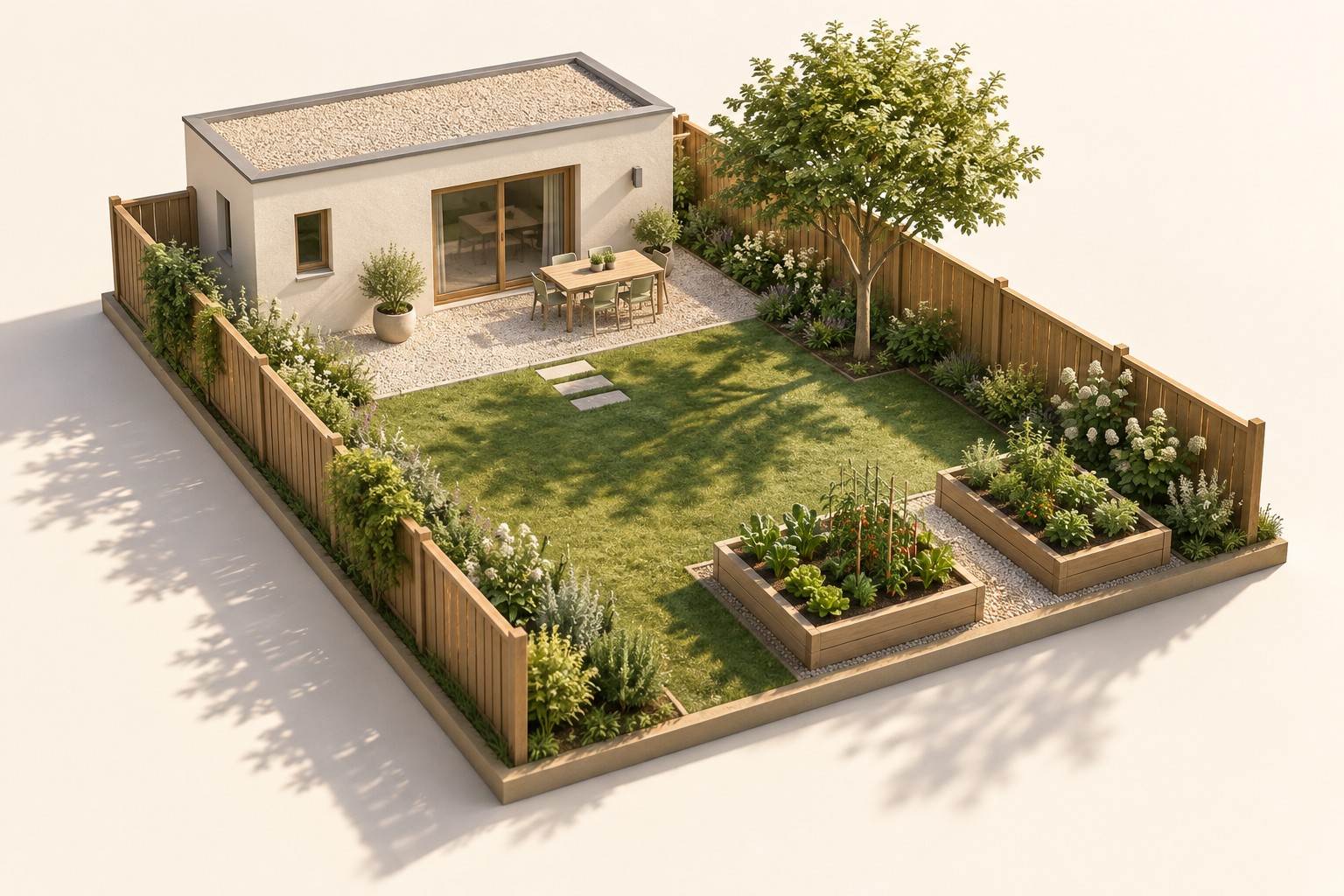
Separate size from position
For a fence, width and depth describe the footprint; height is vertical. Rotation turns that footprint around its centre. Use a narrow depth for a wall aligned across the east/west axis, or rotate it to match the actual boundary. A shed uses a rectangular box with a flat roof; pitched roofs and open sides are not represented.
Use the simple geometry as a check
On level ground, the shadow of a vertical object extends away from the sun. Its ideal length is height divided by the tangent of solar altitude. At a 45° altitude, a 2 m object casts a 2 m shadow. At lower angles it can be much longer. This arithmetic checks direction and scale; it is not a promise that a complex building has one single shadow length.
Change one assumption at a time
Save the original scene. Increase the proposed height while keeping location and date fixed, then compare the observation point’s direct intervals. Restore the original before moving the obstacle. If you change height, orientation and date together, it becomes hard to explain why the result changed. Numeric fields make these small experiments repeatable.
Inspect the awkward times
Look near the beginning and end of an exposure period, not just at midday. Low sun makes shadows long and highly sensitive to small errors in height and orientation. The 5-minute sample may skip a very narrow opening. An object outside the visible camera view can still block rays if it remains in your model.
Know what this cannot approve
A visual estimate cannot establish permission to build, a legal right to light or compliance with a local rule. Missing neighbours, sloping terrain and inaccurate dimensions can change the real result. Use a verified survey and an appropriate professional process when your decision requires those assurances.