 Sunlight
Guides
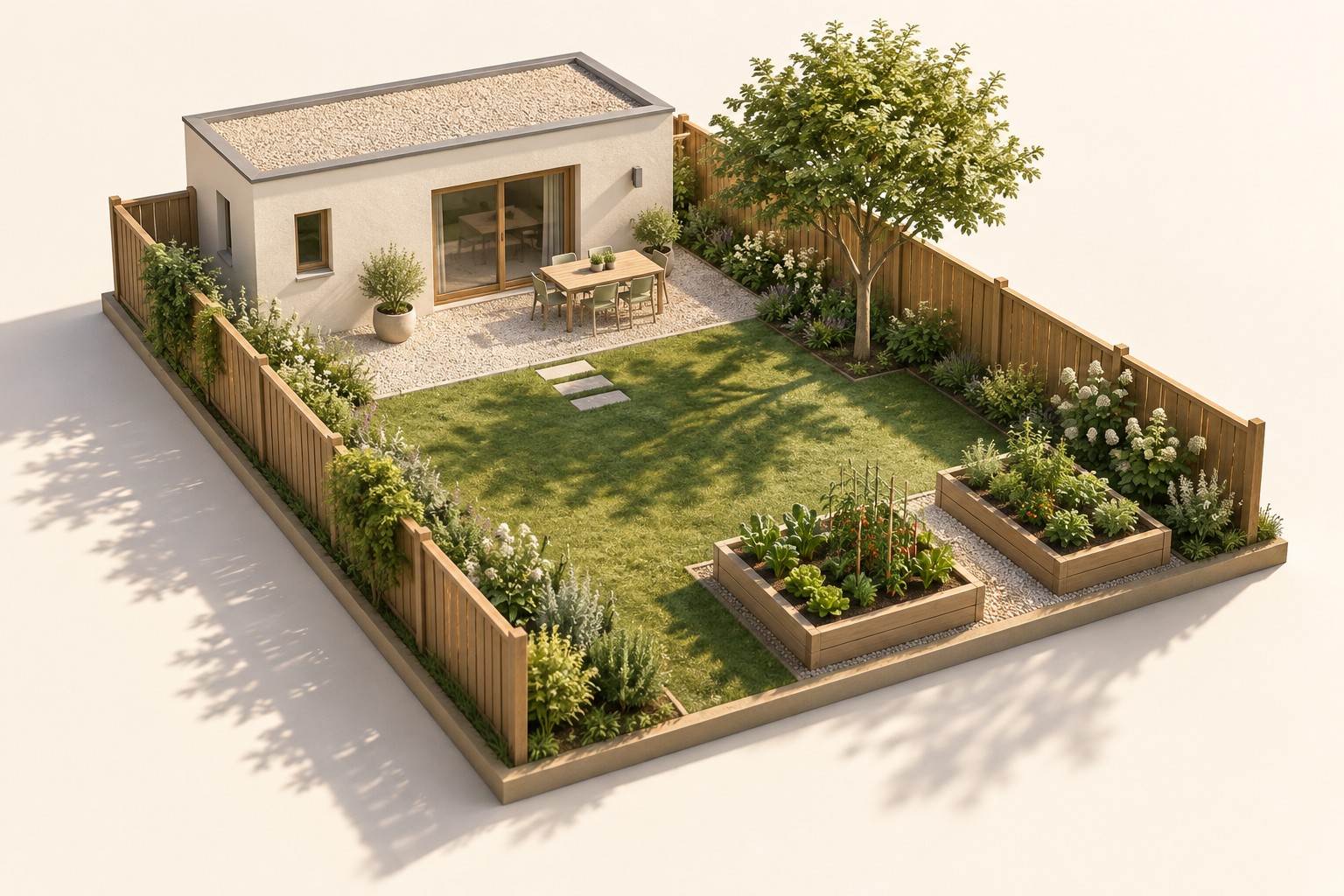
Compare two places for a raised bed
Use the same surroundings and date to compare candidate points without turning sunlight estimates into plant advice.
Ask a question the model can answer
“Which of these two ground points has more modelled direct sunlight on this date?” is a useful, limited question. “Will this vegetable thrive here?” also depends on the plant, weather, soil, water and many other factors. The planner has no crop database and does not translate sunlight hours into a planting recommendation.
Keep the comparison fair
Build and save the surrounding obstacles once. Select a date that matters to your use of the garden. Place the point at candidate A, calculate the day and export its CSV or PNG. Move only the point to candidate B, recalculate and export again. Keep location, time zone, obstacle dimensions and date unchanged.
Look at timing as well as totals
Two points may have similar daily totals but different intervals. One might receive light before a building casts its shadow; another may be exposed later. Read the interval list rather than judging from a single noon screenshot. The timeline samples geometry every 5 minutes, so very short flashes between obstacles can be missed.
A point is not a whole bed
Repeat the check at corners and the centre if the planned area crosses a shadow edge. The current model’s point is on level ground; raising a bed or evaluating leaves above ground is not directly modelled by moving the point. Do not add a bed-shaped obstacle underneath the point and interpret its shadow as plant exposure.
Check several dates and the actual site
Use the four-date comparison to notice seasonal differences, then check your own relevant dates. Labels are calendar dates because June and December have opposite seasonal meanings across hemispheres. Keep practical access and observed conditions in the decision, and consult a suitable horticultural source for plant-specific requirements.